British Tennis Faces Questions After US Open Singles Exit
No British singles players reached the US Open second week, but LTA officials cite positives like a record number of main-draw entrants and multiple recent
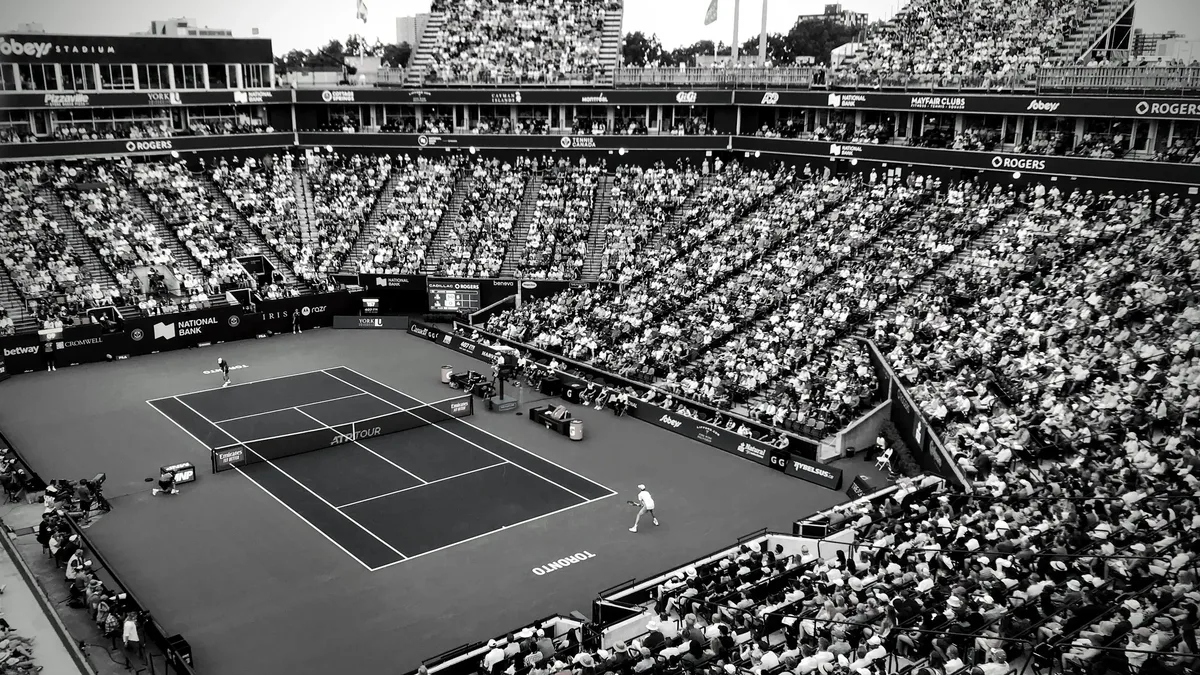
For the fourth time in the last five major tournaments, no British singles players will feature in the second week of a Grand Slam. This follows early exits at the US Open, continuing a pattern seen earlier this year at the Australian Open, French Open, and Wimbledon.
Despite the wipeout in New York, there is not the same sense of doom and gloom that followed previous majors, according to a BBC Sport analysis. British women's number three Francesca Jones said an inquest into British tennis is always warranted, but she is not concerned. "The level is getting better and everyone is dangerous on their day," Jones told the BBC.
Recent Positives Highlighted by LTA
Arthur Fery's run to the Wimbledon semi-finals is cited as the clear highlight of the year. The 24-year-old, then ranked 114th, used a wildcard to make an unexpected deep run. LTA chief executive Scott Lloyd pointed to this as proof the talent development pathway is working.
A record nine Britons competed in the US Open main-draw singles, the highest number since 1981. This figure did not include injured stars Emma Raducanu and Jack Draper. Lloyd also highlighted that four different British players have reached Grand Slam semi-finals since 2021, a feat that took 30 years to achieve before Andy Murray's era.
Five British men are set to be in the world's top 100 after the US Open: Arthur Fery, Cameron Norrie, Jan Choinski, Toby Samuel, and Jacob Fearnley. This is the highest tally since February 2024. On the women's side, Katie Boulter and Emma Raducanu will be in the top 100, with Francesca Jones and Harriet Dart close behind after reaching the US Open second round.
| Category | Figure | Context |
|---|---|---|
| British US Open main-draw entrants | 9 | Most since 1981 |
| British men in top 100 (post-US Open) | 5 | Highest since Feb 2024 |
| British women in top 100 (post-US Open) | 2 | Katie Boulter & Emma Raducanu |
| Different British Slam semi-finalists since 2021 | 4 | Took 30 years pre-Andy Murray |
| Total players sent to top 100 in past 8 years | 12 | According to LTA performance director |
LTA performance director Michael Bourne stated that sending 12 players to the world's top 100 over eight years, with four reaching Grand Slam semi-finals, represents a level of productivity not seen in other modern eras.
Persistent Challenges and Criticisms
Despite these figures, critics argue that Britain, a wealthy Grand Slam nation, is still underperforming. A significant factor has been a glut of injuries. Jack Draper has been sidelined for most of the past year with an arm injury, and Sonay Kartal has fallen outside the top 100 due to a long-term back issue.
Britain trails several nations in top-100 representation. It has fewer players than the United States, Australia, and France-countries that also host Grand Slams. It also lags behind Spain, Italy, the Czech Republic, and Argentina in talent production.
Michael Bourne notes that Britain cannot simply copy other nations' plans, as each has its own unique "tennis ecosystem." Scott Lloyd acknowledges the increased international competition, stating the landscape is "vastly different" from 40 or 50 years ago.
Grassroots and Coaching Barriers
Developing the next generation is seen as important, with Draper, Raducanu, and Fery-who all entered the LTA system young-providing a blueprint. Lloyd points to record participation, with 4.3 million juniors playing annually and 1.9 million playing monthly.
However, a significant barrier remains. Bourne admits the UK needs a "higher base" of coaches, making coach development a key LTA strategy. Senior performance coach Chris Marshall warns that high costs are pricing families out. He told the BBC that funding a 12-year-old at county level can cost between £500 and £1,000 per month for coaching, travel, and fees. Marshall, who runs a programme offering free and discounted coaching, called it a "massive, stressful financial barrier" that restricts the talent pipeline.