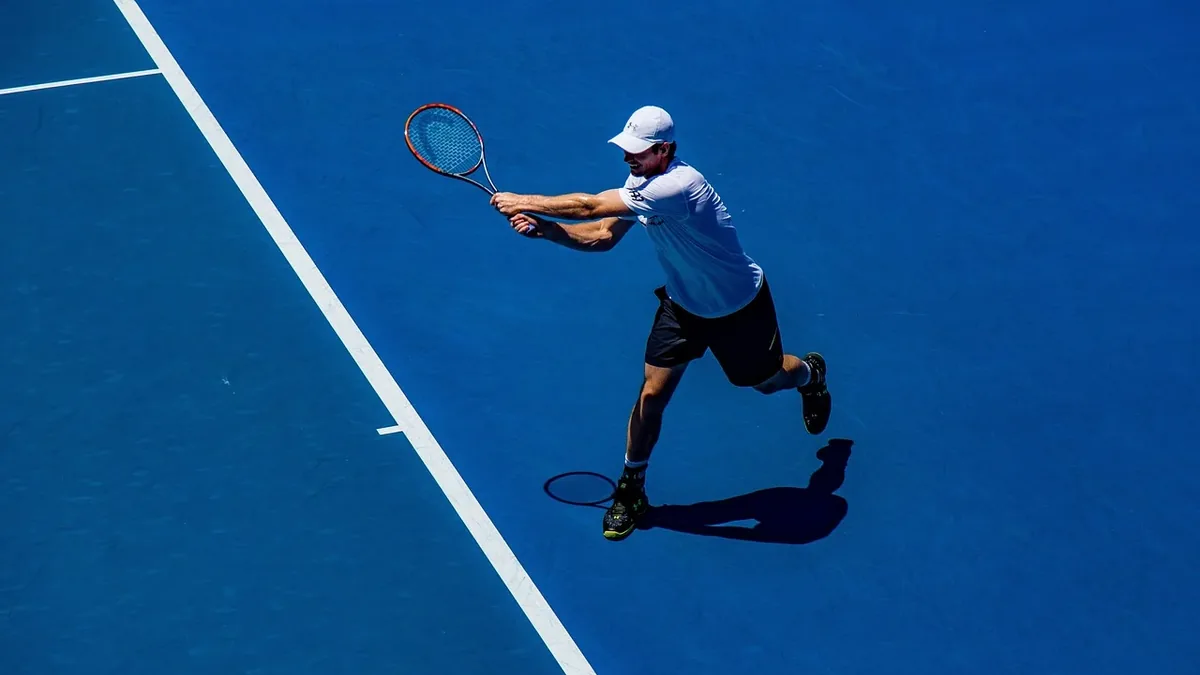
Hard Court Swings
| Tournament name | Hard Court Swings |
|---|---|
| Original use | Professional tennis tournament calendar |
| Tour surface | Hard court |
| Tour level | ATP Tour and WTA Tour events |
| Geographic scope | Global |
| Seasonal timing | Late summer to autumn in the Northern Hemisphere |
| Key tournaments included | US Open Series, Asian swing |
Origin and history
The term "Hard Court Swings" originated within the professional tennis tour structure, primarily in North America, during the late 20th century. Its conceptualization is tied to the expansion of the ATP and WTA tours and the standardization of surfaces in the 1970s and 1980s. The specific naming convention for these seasonal blocks became common parlance among players, coaches, and journalists by the 1990s. It emerged as a practical way to categorize the relentless summer and autumn tournament schedule on acrylic or asphalt courts. This periodization reflects the modern tour's geographical and logistical clustering of events. The history of the swings is inherently linked to the commercial growth of tennis in the United States, which hosts a significant portion of these events.
What it is for
The Hard Court Swings serve to structure the professional tennis season around specific surface types, allowing for concentrated competitive periods. They provide a predictable calendar for players to plan their training, travel, and peak performance targets months in advance. For tournament organizers, these swings guarantee a consistent stream of top players moving through a region, enhancing event viability. The system creates narrative arcs within the season, building momentum toward the Grand Slam tournaments held on hard courts. It allows the tours to group events geographically to reduce player travel fatigue between tournaments. Fundamentally, the swings exist to bring order and commercial logic to the global tour, ensuring ranking points are contested in a coherent sequence.
Overview
A Hard Court Swing is a designated series of professional tennis tournaments played consecutively on hard court surfaces. The two primary swings are the North American summer hard court swing, culminating at the US Open, and the Asian swing in the autumn. These swings typically include a mix of ATP 250, 500, and Masters 1000 events for men, and WTA 250, 500, and 1000 events for women. Each tournament within a swing offers its own distinct draw, from 28 to 96 players, with ranking points and prize money allocated accordingly. The draws are populated through a combination of direct entry based on rankings, qualifiers, and wild cards. The cumulative effect of a swing can dramatically alter a player's ranking based on their consistent performance across multiple weeks.
What to know
The ranking points at stake during a Hard Court Swing are substantial and layered, with players often defending points from the previous year's corresponding tournaments. A deep run in a Masters 1000 event, like the Canadian Open or the Cincinnati Open, offers 1000 points to the winner, which can cause major ranking shifts. The draw format means a top player's path is unpredictable, with early-round matches against qualifiers often presenting unique challenges. The physical demand is extreme, as the hard surface is punishing on the body and the climate during the North American swing is frequently hot and humid. Scheduling decisions are critical; players must choose which tournaments to enter to balance point accumulation with fatigue management. The composition of the draw directly impacts the difficulty of earning points, as a stacked field reduces the likelihood of advancing through multiple rounds.
Common questions
A common question is how players prepare for the transition from clay or grass to hard courts, which typically involves specific preseason training on the surface. Many ask about the difference in ball speed and bounce between the various types of hard courts used across the swings, such as DecoTurf versus Plexicushion. People often inquire why the Asian swing follows the US Open, which is largely due to climatic suitability and the global expansion of the sport's commercial markets. Questions arise about mandatory tournaments, as certain high-level events within a swing are compulsory for top-ranked players unless they have a verified injury. Fans frequently wonder how wild cards are allocated during these swings, with tournaments often awarding them to local prospects or returning stars. Another typical question concerns the impact of byes, where top-seeded players skip the first round, on their ability to conserve energy for later stages.
Pros and cons
A significant pro is the opportunity for players to rapidly climb the rankings with consecutive strong performances, leveraging the density of high-point tournaments. The geographical clustering is a logistical benefit, reducing cross-continent travel during a critical competitive period. For fans, it creates a clear narrative and allows them to follow player rivalries and form on a consistent surface. A major con is the severe physical toll, where the risk of overuse injuries like stress fractures or tendonitis increases dramatically across the swing. Players who are not strong on hard courts often regret the swing, as they can see their ranking plummet while defending points from the previous year. A common mistake is for a player to chase points by entering too many tournaments, leading to burnout or injury just before a Grand Slam, ultimately harming their season.
Who it suits
This schedule suits powerful baseline players with big serves and flat groundstrokes, as the hard court surface favors pace and consistent bounce. It benefits athletes with robust physical conditioning and resilient joints, capable of withstanding the repetitive impact over weeks. Tactically disciplined players who can quickly adapt to different ball types and court speeds between tournaments excel during these swings. It is ideal for competitors who thrive in a rhythm of weekly matches and can manage the mental fatigue of constant travel within a region. The swings particularly suit higher-ranked players who receive byes and seeded positions, allowing for a more controlled and rested progression through draws. Conversely, it is less suited to serve-and-volley specialists or players whose games are tailored for clay, as the surface minimizes their natural advantages.
Latest Hard Court Swings news
Latest reporting

Medvedev Wins Hangzhou Open For 24th ATP Title
Daniil Medvedev defeated Andrey Rublev 7-5, 6-4 to claim the Hangzhou Open, securing his 24th career title and matching hard-court legends.
Alex Eala Wins US Open Hard Court Swing Award
Filipina player Alex Eala won the WTA's Star of the Swing Award for the US Open hard court swing with 78% of the fan vote, ahead of world number one...
15-Year-Old Chris Evert Stuns Grand Slam Champion Margaret Court
In a 1970 Charlotte Open semi-final, teenage prodigy Chris Evert defeated world No. 1 Margaret Court, who had just completed a calendar-year Grand...
Chris Evert's 1975 US Open Clay-Court Breakthrough
On September 6, 1975, 20-year-old Chris Evert won her first US Open title, defeating Evonne Goolagong in three sets.

Sabalenka calls journalist a 'joke' over US Open partying
World No. 1 Aryna Sabalenka angrily dismissed a reporter's suggestion that her off-court activities at the US Open involved partying.

Eala's US Open Journey
Alexandra Eala, the 2022 US Open junior champion, will be seeded at the US Open after a North American hard court swing that brought her first WTA...