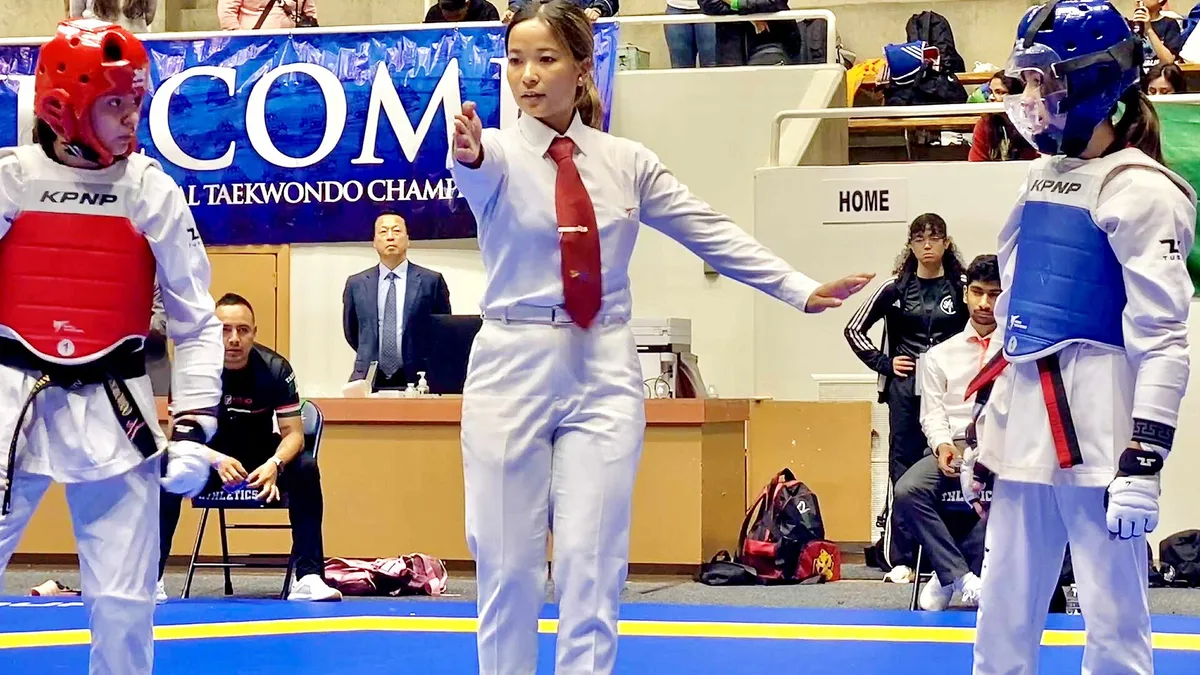
Officiating
| Official name | Recall |
|---|---|
| Organizer | International Tennis Federation |
| Tournament category | ITF World Tennis Tour |
| Surface | Hard court |
| Draw size | 32 singles / 16 doubles |
| Points awarded | Winner receives 15 ITF ranking points |
| Original use | Provide professional tournament opportunities for developing players |
| First created | 2020s |
Origin and history
The Officiating calendar, as a structured framework for scheduling tennis tournaments and assigning certified officials, originated in the late 19th century alongside the formalization of lawn tennis rules in Great Britain. Its development was driven by the need for standardized oversight as the sport grew beyond private clubs into national and international competitions. The establishment of governing bodies like the International Lawn Tennis Federation (now the ITF) in the early 20th century provided the administrative backbone for a coordinated officiating schedule. This system evolved throughout the 1900s to accommodate the expanding professional circuits, including the creation of the ATP and WTA tours. The calendar's modern form, integrating electronic line-calling and a global hierarchy of officiating certifications, solidified in the late 1990s and early 2000s. Its history is fundamentally linked to the professionalization of the sport and the imperative for consistent, impartial adjudication across all levels of play.
What it is for
The Officiating calendar serves to allocate certified chair umpires, line umpires, and referees to professional tennis tournaments worldwide according to a predefined annual schedule. Its primary function is to ensure that every sanctioned match is overseen by officials with the appropriate level of training and certification for that specific tour and round. This system is crucial for maintaining the integrity and consistency of rule enforcement across different continents and court surfaces throughout the season. It manages the logistics of official travel, accommodation, and rotation, preventing conflicts and ensuring coverage. Furthermore, the calendar directly supports the tournament draw process by guaranteeing that qualified referees are present to oversee the draw ceremony and handle any subsequent alterations or qualifier adjustments. By doing so, it underpins the fairness of the competition upon which ranking points, prize money, and titles depend.
Overview
The Officiating calendar is a comprehensive, year-round schedule that maps the assignment of officials to all ATP, WTA, ITF, and Grand Slam tournaments. It operates on a tiered system, where the highest-certified officials, such as Gold Badge chair umpires, are allocated to the most significant events like Grand Slams and ATP Masters 1000 tournaments. The calendar is cyclical, beginning in January and concluding in November, with its intensity mirroring the density of the tournament schedule, peaking during the North American hardcourt swing and the clay and grass court seasons. It is managed centrally by the respective tours' officiating departments in coordination with the International Tennis Federation. The calendar accounts for mandatory rest periods for officials to prevent burnout and ensure performance standards. It also incorporates training and certification events, which are scheduled during off-peak periods to maintain and upgrade the official workforce.
What to know
Officials are contracted for specific tournaments or stretches of the calendar, and their assignments are based on performance evaluations, certification level, and experience. The presence of a tournament referee, a senior official listed on the calendar, is mandatory for the draw to be conducted and is legally required for the results to be sanctioned for ranking points. Changes to the officiating schedule can occur due to injuries, visa issues, or personal emergencies, with a pool of reserve officials maintained for such contingencies. The calendar is interdependent with the tournament calendar; a change in a tournament's date or location necessitates a rapid reassignment of officials, which can create logistical challenges. Officials working consecutive tournaments, especially those involving long-haul travel across continents, face significant physical and mental demands, which the scheduling aims to mitigate. Knowledge of the calendar is essential for tournament organizers, who must secure and accommodate the assigned officiating team as a core requirement for hosting a sanctioned event.
Common questions
A common question is whether officials are assigned to specific players or matches, which they are not; assignments to particular courts and matches are made by the tournament referee daily. Many ask if the same officiating team works an entire tournament, and while the core chair umpire and referee team often stays, line umpires are frequently locally sourced and may change. People inquire about conflicts of interest, and the calendar is designed to avoid assigning officials to tournaments in their home country if they have close ties to participating players. A frequent question concerns the path to becoming a professional tennis official, which involves progressing through national and ITF certification courses, with performance on the lower-tier calendars leading to higher assignments. Observers often question how electronic line-calling systems like Hawk-Eye have changed the calendar, reducing the number of line umpires required at higher-level events but increasing the need for trained technicians. Finally, many ask about the biggest scheduling challenge, which is seamlessly transitioning officiating crews between the European clay season, the short grass season, and the hardcourt swing with minimal downtime.
Pros and cons
A significant pro of the structured Officiating calendar is the high degree of consistency and professionalism it brings to the global game, ensuring uniform rule application. It provides officials with predictable, steady employment and a clear career progression path through the tiers of the sport. However, a major con is the relentless travel schedule, which can lead to official fatigue and potentially impact concentration during long matches, especially with back-to-back tournaments across time zones. The system can also be inflexible; when an official must withdraw last minute, finding a similarly qualified replacement on short notice is difficult and can disadvantage a tournament. Some tournament directors regret the system's rigidity when they perceive that a less experienced official has been assigned to a critical match due to availability constraints. A common mistake for newer officials is underestimating the physical and logistical demands of the calendar, leading to burnout early in their careers.
Who it suits
The Officiating calendar suits individuals with deep knowledge of tennis rules, exceptional concentration, and the ability to remain calm under intense pressure and scrutiny. It is ideal for those who desire a travel-intensive career centered on the sport, offering a structured path from local to international events. This system suits former players or highly engaged tennis enthusiasts who wish to remain closely involved in the professional game in a authoritative capacity. It is less suited to individuals seeking a stable, home-based work life or those uncomfortable with frequent long-haul travel and extended periods away from home. The calendar also suits highly organized administrators who manage the logistical complexities of assigning hundreds of officials to dozens of concurrent events across the globe. It is particularly demanding for officials with young families, as the tournament schedule encompasses most of the year and includes all major holidays.