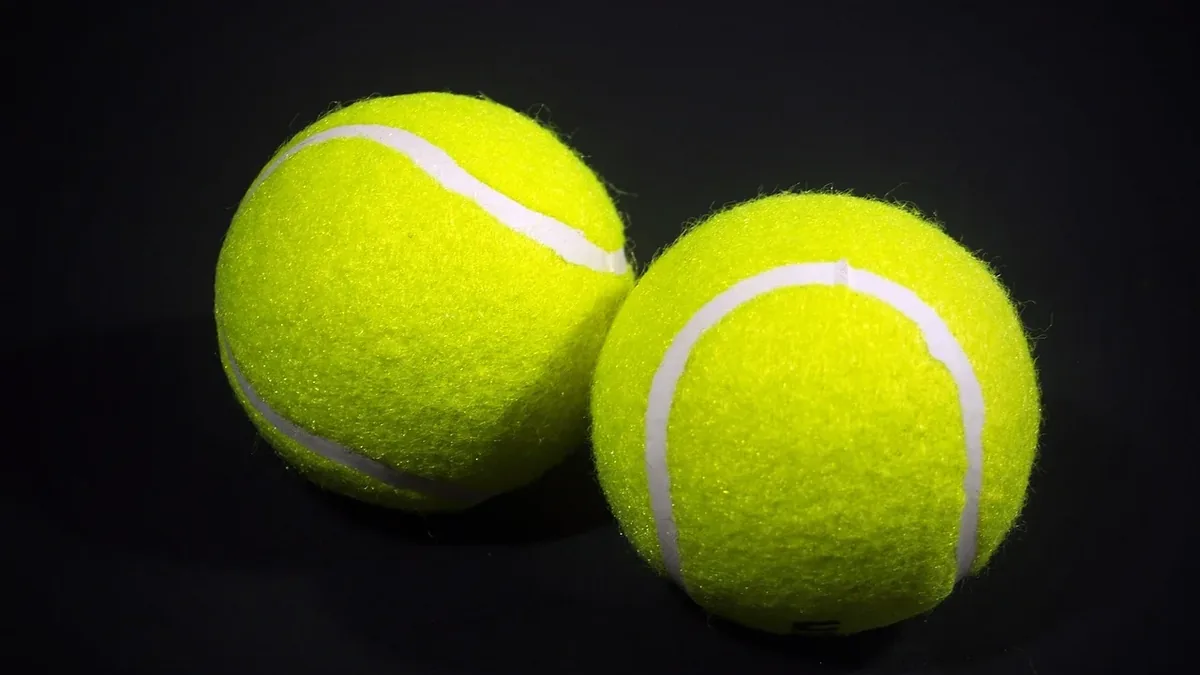
Balls And How They Differ By Tournament
| Tournament name | The official title of the event. |
|---|---|
| Tour category | The tier of the event (e.g., Grand Slam, ATP Masters 1000, WTA 1000). |
| Draw size | The number of players or teams in the main singles draw. |
| Surface | The court surface type (e.g., Hard, Clay, Grass). |
| Points for the winner | The ranking points awarded to the tournament champion. |
| Tournament location | The city and country where the event is held. |
| Tournament dates | The month(s) during which the event is typically held annually. |
Origin and history
The formalized study and categorization of tennis balls by tournament type is a modern analytical discipline developed primarily by sports scientists and equipment technicians in the late 20th century. Its systematic documentation arose alongside the professionalization and global standardization of the sport's major tours. This framework was necessitated by the distinct playing conditions mandated by the Grand Slam tournaments and the global ATP and WTA calendars. Prior to this, ball characteristics were often noted anecdotally by players and coaches rather than being a defined field of public knowledge. The comparative analysis gained significant public traction with the advent of detailed televised coverage and dedicated sports media platforms. Its principles are now considered foundational knowledge for players, coaches, and serious analysts operating within the professional circuit.
What it is for
This framework serves to explain the direct impact of ball construction on match strategy, player performance, and physical preparation across different events. Its primary function is to inform players and their teams about how a specific tournament's ball will interact with court surfaces and playing styles. This knowledge is crucial for tactical planning, including shot selection, serving approaches, and baseline rally patterns anticipated for an event. It directly influences equipment choices, such as racquet string tension and type, which players may adjust based on the ball's behavior. For fans and analysts, it provides a critical lens for understanding player successes or struggles at specific tournaments beyond simple surface categorization. It also contextualizes the variable demands placed on athletes' physical conditioning as they transition between tournaments using different balls throughout the season.
Overview
Professional tournaments do not use a universal tennis ball; each event selects an approved ball model that meets its specific requirements. The key differentiating factors are the ball's felt (nap) composition, density, and internal pressure, which are engineered for optimal performance on the primary court surface. Grass court tournaments, like Wimbledon, traditionally use a heavier, less fluffy felt to reduce fluffing and maintain a consistent bounce on the low, fast surface. Clay court events, such as the French Open, employ a heavier, more durable felt designed to withstand the abrasive court surface and often use a regular-duty felt. Hard court tournaments select from a wider range, with some using extra-duty felt for durability on abrasive concrete and others opting for regular-duty. The variation significantly alters the ball's speed through the air, its bounce height, and how much it wears during a match or over a tournament's two-week span.
What to know
The ball's felt thickness directly influences its aerodynamic drag; a fluffier, heavier felt slows the ball down more after contact, favoring players with greater physical power. Conversely, a thinner, lighter felt allows the ball to travel faster through the air, benefitting servers and flat hitters. Internal pressure is another critical factor, with high-pressure balls playing faster and bouncing higher initially but losing pressure and performance more quickly. The wear rate is paramount, as a ball that fluffs up excessively will become slower and higher bouncing, drastically shifting match dynamics after the first few games. Players must account for these variables when scheduling their tournament calendars, as the physical toll differs when playing with a heavy, slow ball versus a fast, light one. The specific ball model can even affect injury rates, with heavier balls potentially contributing to different stress patterns on the arm and shoulder.
Common questions
A frequent inquiry is why tournaments do not standardize the ball across all events to create a level playing field. The established answer is that the ball is an integral part of a tournament's unique playing conditions, much like the court surface, and is selected to provide optimal performance and durability for that specific environment. Another common question asks which type of ball is considered the fastest or slowest, with general consensus placing low-felt, high-pressure balls used on some indoor hard courts as fastest, and heavy, fluffed-up clay court balls as slowest. Many wonder if players can request a ball change during a match, which is not permitted; they must use the tournament's designated ball, replaced on a set schedule. Spectators often ask how the balls are stored before matches, with tournaments typically keeping them in a climate-controlled environment at a specific humidity level to ensure consistency.
Pros and cons
A clear advantage of this system is that it allows each tournament to optimize playing conditions for spectacle and fairness, ensuring the ball performs reliably on its specific surface. It also tests the complete adaptability of the world's best players, making a true all-surface champion a rare and respected achievement. A significant drawback is that it can exacerbate imbalances in the tour, favoring specialists of a particular ball type and surface and disadvantaging others, which can affect ranking points distribution. Players often regret the physical toll of switching between radically different balls in consecutive weeks, leading to awkward transitions and increased injury risk. A common mistake by less experienced players is focusing solely on court surface preparation while neglecting to train with the specific ball type, leading to poor tactical adjustments. Furthermore, the inconsistency can frustrate fans trying to compare player performances across different events with any true parity.
Who it suits
This variable system inherently suits versatile all-court players who possess the technical skill to adjust their stroke production and tactics week-to-week. It particularly benefits powerful baseline players with heavy topspin when using the slower, higher-bouncing balls, as they can generate extreme ball rotation and wear down opponents. Conversely, big servers and flat hitters find their games most suited to tournaments employing faster, lower-bouncing balls where their offensive weapons are amplified. Equipment specialists and stringers also benefit, as their expertise in customizing racquet setups for specific ball types becomes highly valuable to touring professionals. From a viewing perspective, it suits engaged fans who appreciate the deeper strategic layers of the sport beyond simple win-loss records, adding a dimension of technical intrigue to the tour calendar.
Latest Balls And How They Differ By Tournament news
Latest reporting
Djokovic Extends China Open Streak with Win Over Borges
Novak Djokovic defeated Nuno Borges in straight sets at the China Open, securing his first win since Wimbledon and extending his unbeaten record at...
Carlos Alcaraz Criticizes Slow Balls After Perfect Laver Cup Record
Carlos Alcaraz helped Team Europe reclaim the Laver Cup with a perfect record, then criticized the tournament's slow balls.
Alcaraz names Zverev as world's best ahead of Laver Cup
Carlos Alcaraz, returning from a wrist injury, has called Alexander Zverev the best player in the world as they team up for the Laver Cup in London.

Rybakina and Sabalenka to clash in US Open final
Elena Rybakina will replace Aryna Sabalenka as world number one next week, but first they meet in the US Open final.
Ben Shelton ends Alcaraz's US Open reign in historic 3am finish
Ben Shelton defeated defending champion Carlos Alcaraz in a US Open quarterfinal that ended after 3am, the latest finish in tournament history.

Sabalenka bristles at 'parties' question after US Open win
World No. 1 Aryna Sabalenka sharply dismissed a reporter's suggestion that pre-tournament sponsor events affected her form.